Pixel Fold
Google first passport-style foldable with wide cover display and flagship triple cameras.
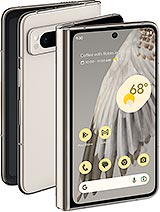
- $1,799
- ACTIVE
Key specifications
- MSRP
- $1,799
- Price
- Display
- 7.6" Foldable OLED / 2208x1840 / 120Hz
- Screen
- Chipset
- Google Tensor G2
- Performance
- RAM and storage
- 12GB / 256GB / 512GB
- Memory
- Rear camera
- 48MP
- Camera
- Front camera
- 9.5MP
- Camera
- Battery
- 4821mAh
- Power
- Charging
- 30W wired / 7.5W wireless
- Power
- Weight
- 283g
- Build
- IP rating
- IPX8
- Durability
- Colors
- Obsidian / Porcelain
- Finish
- Highlights
- passport form factor / comfortable wide cover screen / 5x optical telephoto / fluid multitasking
- Notes
Scorecard
Seven-axis scores derived from ingested reviews. Rows expose agreement, dissent, and confidence without adding visual softness.
Camera
8.8
Confidence: 90%
Evidence: +3 / -0
The Google Pixel Fold delivers a top-tier photography experience for a foldable, characterized by Google's signature contrast-rich processing and strong low-light performance. Its triple-lens rear array, featuring a 48MP main sensor and a 5x optical telephoto, competes effectively with flagship slabs like the S23 Ultra in detail and dynamic range. Reviewers highlight unique software features like Long Exposure for motion blurring and 'photo tricks' that leverage the Tensor G2. While the hardware is robust, some software instability in the camera app and the inability to use the inner camera for face unlock are noted drawbacks. Overall, it provides a 'no-compromise' imaging experience that bridges the gap between foldables and traditional high-end camera phones.
Battery
7.5
Confidence: 80%
Evidence: +3 / -0
The Google Pixel Fold offers reliable all-day battery life for most users, typically ending a standard day with approximately 40% remaining after 4 hours of screen-on time. Its 4,821 mAh capacity (reported as 4,727 mAh in some tests) provides enough endurance to survive heavy usage days, including GPS navigation, into the early morning hours. However, endurance is highly dependent on the ratio of inner vs. outer screen usage. Charging is relatively slow by modern flagship standards, peaking at 30W wired, though it includes convenient wireless charging support. While the battery is serviceable, the device's long-term value is slightly hampered by the older Tensor G2 chipset's efficiency compared to newer rivals.
Performance
7.2
Confidence: 85%
Evidence: +2 / -0
The Google Pixel Fold delivers a generally smooth and responsive experience powered by the Tensor G2 and 12GB of RAM. While everyday tasks like web browsing and app switching feel instantaneous, the device shows its limitations during intensive processing, such as photo-editing renders and multi-core benchmarks where it trails behind Snapdragon-based rivals. Reviewers noted occasional software bugginess, including camera app stutters and UI confusion when switching modes. Despite these kinks, the performance is considered solid for a first-generation foldable, though the use of the G2 chipset just before the G3's release raised some longevity concerns.
Display
7.8
Confidence: 90%
Evidence: +4 / -3
The Google Pixel Fold features a high-quality 7.6-inch internal and 5.9-inch external display setup. It excels in color accuracy with a Delta-E of 0.05, significantly outperforming competitors like the Galaxy Z Fold 4 in this metric. However, outdoor visibility is a notable weakness; while the inner panel reaches 1,000 nits, reviewers noted it can struggle in direct sunlight compared to rivals. The design is polarizing due to large internal bezels that may distract some users, though the device's ability to fold completely flat is a design highlight. Refresh rate and resolution are competitive for the flagship foldable segment, though the panel's peak brightness and color saturation (DCI-P3 coverage) trail behind Samsung's offerings.
Build
7.2
Confidence: 80%
Evidence: +3 / -0
The Google Pixel Fold introduces a premium, ultra-thin design that measures just 5.8mm when unfolded, offering a more traditional smartphone aspect ratio on its exterior compared to rivals. While the build is praised for its thinness and 'book-like' ergonomics, significant durability concerns have emerged. Reports indicate the device is susceptible to structural failure when bent backwards and the inner display is vulnerable to debris-related damage between the bezel and screen protector. Despite these risks, the inclusion of an IP water resistance rating and a partnership with iFixit for genuine replacement parts provides some long-term maintenance reassurance.
Software
7.8
Confidence: 85%
Evidence: +3 / -0
The Google Pixel Fold offers a clean, bloat-free Android experience with unique foldable-specific features like Dual Screen Interpreter Mode and rear-camera selfie guidance. While the Tensor G2 chip generally provides smooth performance and enables signature AI tools like Magic Eraser, the software at launch exhibited notable bugs, including camera aspect ratio glitches and UI stutters. The update commitment is strong, with Android 14 expected to unlock further multi-screen capabilities, though it initially lacked some of the mature software refinements found in competitors like Samsung. The UI consistency is high, though some reviewers noted a lack of creative software ideas to fully utilize the unique hardware at launch.
Value
7.2
Confidence: 85%
Evidence: +3 / -0
The Google Pixel Fold enters the market as a premium, high-cost foldable that reviewers find impressive but difficult to justify at full list price. Its value proposition is bolstered by a superior form factor compared to Samsung's Galaxy Z Fold 4, featuring wider, more usable displays and a thinner profile. However, it is hampered by the aging Tensor G2 chipset, which trails behind year-old Qualcomm-powered rivals in raw performance benchmarks. While the camera system and software experience are highly rated, reports of durability issues—including screen damage and structural fragility—combined with a high entry price, lead reviewers to suggest waiting for discounts rather than paying the launch MSRP.
Ask About This Phone
Excerpts are scoped to this device. For cross-device picks, use the recommender or Browse catalog.