Pixel 10
The all-around Google flagship with custom TSMC Tensor G5 and Gemini on-device intelligence.
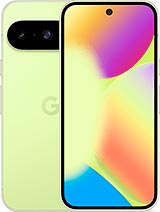
- $799
- ACTIVE
Key specifications
- MSRP USD
- $799
- Price
- Display
- 6.3" Actua OLED / 2424x1080 / 120Hz
- Screen
- Chipset
- Google Tensor G5
- Performance
- RAM and storage
- 12GB / 128GB / 256GB
- Memory
- Rear camera
- 50MP
- Camera
- Front camera
- 10.5MP
- Camera
- Battery
- 4700mAh
- Power
- Charging
- 27W wired / 15W wireless
- Power
- Weight
- 198g
- Build
- IP rating
- IP68
- Durability
- Colors
- Obsidian / Porcelain / Wintergreen / Rose
- Finish
- Highlights
- Custom TSMC 3nm Tensor G5 / 2800-nit Actua display / 7 years of OS & Feature Drops / On-device Gemini Nano
- Notes
Scorecard
Seven-axis scores derived from ingested reviews. Rows expose agreement, dissent, and confidence without adding visual softness.
Camera
8.5
Confidence: 80%
Evidence: +3 / -0
The Google Pixel 10 offers a highly reliable and flexible camera system that maintains consistent color and exposure across its lenses. The addition of a dedicated zoom lens provides robust quality in bright conditions, though it struggles with noise in lower light compared to Pro models. While the main and ultrawide sensors deliver the signature Pixel reliability, the telephoto lens reaches its functional limit at 20x magnification. Overall, it is considered one of Google's most balanced camera packages to date, offering a flagship experience with few compromises at its price point.
Battery
7.5
Confidence: 90%
Evidence: +3 / -0
The Google Pixel 10 demonstrates solid battery endurance, lasting over 13 hours in standardized rundown tests, which outperforms the iPhone 16 but trails significantly behind the Samsung Galaxy S25. The device features a 4,970mAh battery and introduces support for the Qi2 wireless charging standard, allowing for better ecosystem compatibility. However, charging speeds remain a notable bottleneck compared to competitors, with wired charging capped at a relatively slow 25W and wireless at 15W.
Performance
7.5
Confidence: 80%
Evidence: +2 / -0
The Google Pixel 10 introduces the Tensor G5 processor, which provides specialized improvements for AI and imaging pipelines. While everyday responsiveness is generally high, benchmarks indicate that the performance uplift over previous generations is modest. A notable concern for long-term memory management is the disparity in RAM compared to Pro models, which may impact the device's ability to handle future AI features over its seven-year update cycle. Additionally, users may need to manually enable 'Smooth Display' to achieve the expected fluid scrolling animations, as it is disabled by default.
Display
8.5
Confidence: 90%
Evidence: +4 / -1
The Google Pixel 10 features a 6.3-inch Actua display that demonstrates significant technical improvements in brightness and color accuracy. Lab testing confirms a peak brightness of 2,333 nits, which substantially outperforms competitors like the iPhone 16 and Galaxy S25. Color performance is strong with a Delta-e rating as low as 0.29, indicating high accuracy. However, the user experience is slightly marred by software defaults; the 'Smooth Display' high-refresh-rate feature is disabled out of the box, leading to less fluid animations until manually adjusted. The physical design remains durable, utilizing Gorilla Glass Victus 2 and spacecraft-grade aluminum.
Build
8.5
Confidence: 60%
Evidence: +2 / -0
The Google Pixel 10 represents a significant refinement in build quality, adopting a 'sharp' and 'cool' design language that aligns it more closely with premium competitors. A major functional addition to the build is the inclusion of MagSafe ecosystem compatibility out of the box, enhancing the utility of its USB-C and wireless charging architecture. While specific IP ratings or drop test results are not detailed in these excerpts, the device is described as a 'refined' product that nails the aesthetic and tactile expectations of a modern flagship. However, the lack of battery life improvement compared to the previous generation suggests that internal space management or thermal efficiency within the chassis has not advanced significantly.
Software
7.5
Confidence: 90%
Evidence: +3 / -0
The Google Pixel 10 offers a clean, bloat-free Android experience with a strong seven-year update commitment. The UI is praised for its aesthetic consistency and widget integration, though the settings menu remains disorganized. While the software is generally fluid, users must manually enable 'Smooth Display' for optimal scrolling. A significant drawback is the lack of feature parity; several key AI tools and call-screening features are restricted to Pro models despite similar hardware benchmarks, and some new AI additions like 'Screenshots' are viewed as more cumbersome than helpful.
Value
8.5
Confidence: 90%
Evidence: +2 / -0
The Google Pixel 10 is positioned as a strong value proposition by maintaining the same launch price as its predecessor while offering a faster processor, improved camera flexibility, and a durable design. Reviewers highlight it as a 'compact flagship with few compromises.' While the Pro model is noted as more future-proof due to superior hardware, the base Pixel 10's value is further enhanced by Google's historical trend of significant post-launch discounts (often $150-$300), making it a highly competitive option against direct peers.
Ask About This Phone
Excerpts are scoped to this device. For cross-device picks, use the recommender or Browse catalog.